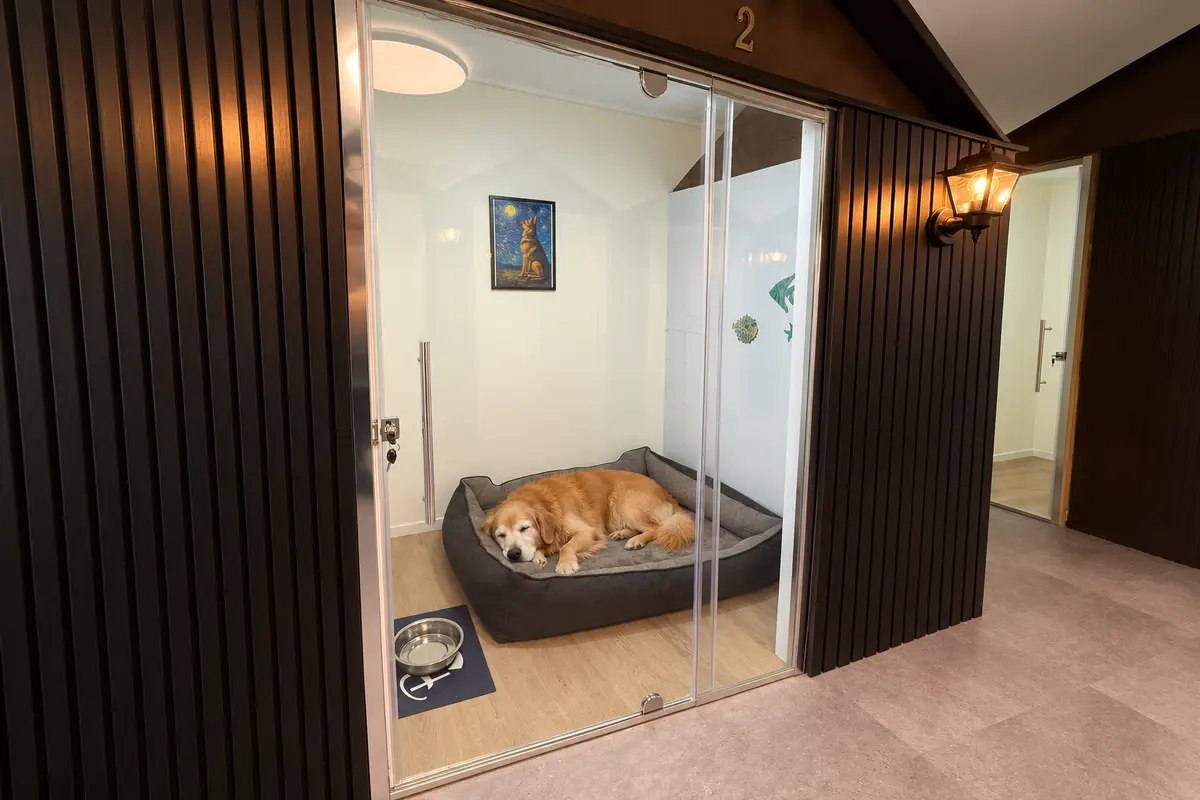
Start with your dog’s normal routine.
Tell us how your dog normally eats, sleeps, moves, toilets and settles at home. Let us know about arthritis, mobility issues, reduced sight or hearing, medication, special food, changes in appetite or recent veterinary advice.
Choosing a suitable room and daytime routine.
Some older dogs prefer a quieter private space. Others enjoy gentle time near familiar people and dogs. During assessment, we consider whether a shared Pack Lounge, Paw Pod or Alpha Suite is the better fit, as well as the amount of activity and rest needed.
Medication and health information.
Bring medication in its original packaging with written instructions. Give us the name of your veterinary clinic and tell us about any condition that may change during the stay. We will confirm the care arrangements before accepting the booking.
If your dog is unwell, in pain, highly distressed or needs nursing-level care, a hotel stay may not be the best option. Talk with your veterinarian and contact us early.
A quieter first stay can help.
For some senior dogs, a short familiarisation or a shorter first booking is a good way to see how they settle. We do not force a dog into an arrangement that is not working for them.
General senior dog care.
This external video provides general education. Your own veterinarian should advise on your dog’s individual health and care needs.